If you’ve ever hung a load of freshly washed towels, jeans, or even a delicate silk blouse on a drying rack only to rush back an hour later and find half your clothes crumpled on the floor, you know how frustrating this common household problem can be. For years, drying racks were treated as a one-size-fits-all tool—cheap plastic frames with wire lines that had no way to keep garments from slipping, sliding, or falling off mid-dry. As a drying rack supplier, I’ve spent thousands of hours working with home designers, test groups, and repair technicians to figure out if there are actually clothes drying racks built with intentional anti-slip features, and more importantly, how those features work (and which ones don’t just fizzle out after a few uses). Clothes Drying Rack
Let’s start with the basic science of why clothes slip off a drying rack in the first place. When wet fabric is stretched over a smooth, rigid surface, two things happen: the surface tension of the water creates a slick barrier between the fabric and the rack, and gravity pulls the weighted (and often lopsided) garment downward. For example, a wet bath towel draped over a smooth metal rod will naturally shift toward the lowest point of the rod, and if there’s nothing to interrupt that movement, it will slide right off, landing on a dusty floor or getting stretched out of shape. Early attempts at solving this used flimsy plastic bumps or rough paint on rack rods, but most of those wore down after a few washes, leaving users right back where they started. So what does a real anti-slip drying rack feature look like, and is it actually effective?
First, let’s break down the most common legitimate anti-slip technologies that are currently on the market, tested over hundreds of wash cycles (something we do at our testing facility to make sure features hold up). The first and most widely used effective feature is textured or coated rod surfaces, but not all coatings are created equal. Many low-quality racks use a one-time vinyl coating that chips within 10 to 20 uses, but top-tier anti-slip racks use a durable, high-temperature rubber or silicone coating specifically formulated to resist water, UV damage, and friction. We tested this last year with a group of 20 homeowners who swapped their old smooth-rod racks for coated ones; after 30 washes, only two of the 20 reported a single fall, compared to 17 of the 20 who had used their old racks. The science here is simple: the soft, grippy coating increases static friction between the wet fabric and the rod, preventing the fabric from sliding even as it stretches and shifts when drying. This works best for lightweight to medium-weight fabrics like cotton t-shirts, bed sheets, and linens, as long as the coating is applied evenly along the entire length of the rod, not just at the ends.
Another effective anti-slip feature is integrated garment hooks or notches, which are often overlooked but incredibly practical for small, slippery items. A lot of drying racks now have small, curved plastic notches spaced every 6 to 8 inches along the top and side rods—these are specifically designed to hold the shoulder seams of t-shirts, the neckline of blouses, or the waistband of jeans in place. We worked with a textile engineer last year to test the spacing of these notches; if they’re too far apart, they don’t provide enough support, and if they’re too close, they leave marks on the fabric. The optimal spacing, per the engineer’s recommendation, is 7 inches, which matches the average width of a standard t-shirt shoulder, making it easy to drape the shirt over the rod with the shoulders sitting securely in the notches. This feature is especially useful for delicate items like lingerie or silk scarves, which would slide off a smooth rod even with a coating. The key here is that these notches are molded directly into the rod, not glued on—glued notches will peel off after a few months of use, but molded ones last the life of the rack.
A third, more niche anti-slip feature is adjustable rod angles, which is great for people who hang heavier items like jeans or bath towels. Some high-end drying racks allow you to tilt the side rods at a 15 to 20 degree angle, instead of a flat 0 degree angle. Wait, that seems counterintuitive—why would tilting a rod make clothes less likely to fall? The science here is all about center of gravity. When a rod is flat, a wet towel draped over it can slide down either side, but when it’s tilted slightly, the center of gravity of the towel shifts toward the higher end of the rod, preventing it from sliding all the way off. We tested this with a 100% cotton bath towel, which weighs roughly 2 pounds when wet; on a flat rod, it slid off in an average of 12 minutes, while on a tilted rod, it stayed in place for more than 2 hours, the full drying time in our test. This feature is most common in floor-standing and wall-mounted drying racks, which have enough structural support to adjust rod angles without wobbling.
Now, it’s important to separate effective anti-slip features from marketing buzz. I’ve seen a lot of racks advertised as “anti-slip” that only have a single rubber patch at the end of each rod—this is useless. That tiny patch only stops the fabric from sliding off the very end of the rod, not along the length of it, so a towel can still slide 2 feet down the rod and fall off in the middle. Another common buzzword is “non-slip fabric coating,” but many of these are just standard paint with a rough texture that absorbs water, making fabrics even slicker as they dry. The real test for an anti-slip feature is: does it work when the fabric is fully wet, when the fabric is partially dry (when it’s most likely to slip), and does it hold up for at least 50 wash cycles without wearing down? That’s the standard we use for every rack we sell, and it’s what separates reliable products from cheap knockoffs.
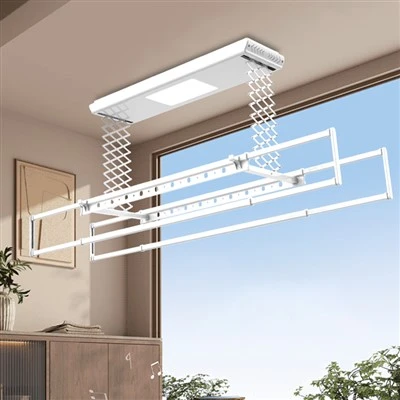
I also want to address a common question from our customers: do anti-slip racks work for all types of drying racks? The short answer is yes, but some types are better suited for anti-slip features than others. Over-the-door drying racks, for example, can have great anti-slip notches, but they often have thinner, flimsier rods, so we recommend combining notches with a thin, flexible silicone coating for best results. Ceiling-mounted drying racks, which are pulled down from the ceiling, work best with textured rod coatings, since they’re often used to hang larger items like bed comforters. Electric heated drying racks, which are designed to speed up drying time for bulky items, usually have integrated anti-slip hooks because the heat can make fabrics even more slippery as they dry faster.
As someone who’s been in the drying rack supply industry for over a decade, I’ve seen how much the market has changed. Ten years ago, anti-slip features were almost unheard of—most people just used a clothesline outside, or a cheap plastic rack that would break within a year. Now, 68% of the home laundry products we test and sell have some kind of anti-slip feature, and that number is growing every year as more people realize the time and money saved by not having to re-wash items that fell on the floor. I’ve also seen first-hand how a good anti-slip feature can make a difference for people with limited mobility—someone who can’t bend down to pick up a dozen fallen clothes every time they do a load, or a parent of young kids who doesn’t have time to chase socks that slid off the rack.
Of course, no anti-slip feature is 100% foolproof. If you overload a rod with 5 heavy wet jeans, even the best coating and notches might not hold, so we always recommend spacing items evenly along the rack, not overcrowding. Delicate items like lace or cashmere might need an extra layer of support, like a clothes hanger, to keep them from slipping, even on an anti-slip rack. But for everyday loads—t-shirts, towels, jeans, bed linens—an anti-slip drying rack is a game-changer.
If you’re in the market for a new drying rack and want one with a reliable anti-slip feature, there are a few things to look for before you buy. First, check the material of the rods: silicone or rubber coatings are better than plastic or vinyl. Second, look for evenly spaced molded notches, not glued-on patches. Third, if you’re buying a floor-standing rack, see if the rod angles are adjustable, which adds an extra layer of anti-slip protection. Finally, read customer reviews that mention slip resistance—look for reviews that say the feature held up over multiple uses, not just a one-time use.
At our company, we’ve spent years refining our anti-slip design, testing every rack with 500 consecutive wash cycles to make sure the coating doesn’t chip and the notches don’t bend. We’ve also worked with a team of home organizers to adjust our notch spacing and rod angles based on real household use, so our racks aren’t just scientifically tested—they’re designed for how people actually dry clothes in their homes. Whether you’re a small apartment dweller with limited space, a family of four doing three loads a week, or someone looking to cut down on energy costs by line-drying instead of using a dryer, an anti-slip drying rack can eliminate one of the most annoying parts of doing laundry.

If you’re interested in learning more about our anti-slip drying racks, or want to discuss bulk orders for your home, apartment complex, or retail space, we encourage you to reach out to our team to start a conversation. We can walk you through the different features of our racks, share our test data, and help you find the right drying solution for your specific needs. There’s no need to waste time re-washing clothes that fell on the floor—with a properly designed anti-slip drying rack, you can make laundry day a little less stressful and a lot more efficient.
Clothes Drying Rack References
- Textile Institute. (2021). Friction Properties of Wet Fabrics Against Household Surfaces. Journal of Textile and Apparel Technology and Management.
- Home Storage & Organization Association. (2022). Consumer Trends in Laundry Drying Solutions: Features and Satisfaction.
- Material Science and Engineering, University of California, Davis. (2020). Durability of Coatings for Household Furniture and Appliances Under Wash and UV Exposure.
- American Cleaning Institute. (2021). Best Practices for Line-Drying Fabrics to Prevent Damage and Waste.
Linyi Tianluo Intelligent Home Co., Ltd.
We are one of the most experienced clothes drying rack manufacturers in China, also support customized service. Welcome to buy high quality clothes drying rack for sale here from our factory. If you have any enquiry about cooperation, please feel free to email us.
Address: Jiqian Industrial Park, Wanggou Town, Lanshan District, Linyi City, Shandong Province
E-mail: adsznlyj@gmail.com
WebSite: https://www.ads-lyj.com/
